Guest Blog: Innovation in Action: How Emerging Industries Are Redefining Economic Competitiveness
This blog was written by Lofton Scholar Recipient, Paul W. Ruppert, CEcD, Senior Commercial Development Manager, Charles County Economic Development Department
At MEDA’s Annual Conference, the “Embracing Innovation” session delivered a clear message: innovation is actively reshaping industries today.
Moderated by Lori Valentine, the session featured three fast-paced presentations highlighting how environmental technology, advanced manufacturing, and aerospace are evolving through new approaches to technology, production, and scale. Each speaker offered a distinct perspective, but together they illustrated a broader truth for economic developers: the regions that win will be those that support industries willing to rethink how things have always been done.
Reinventing Environmental Technology: From Waste to Opportunity
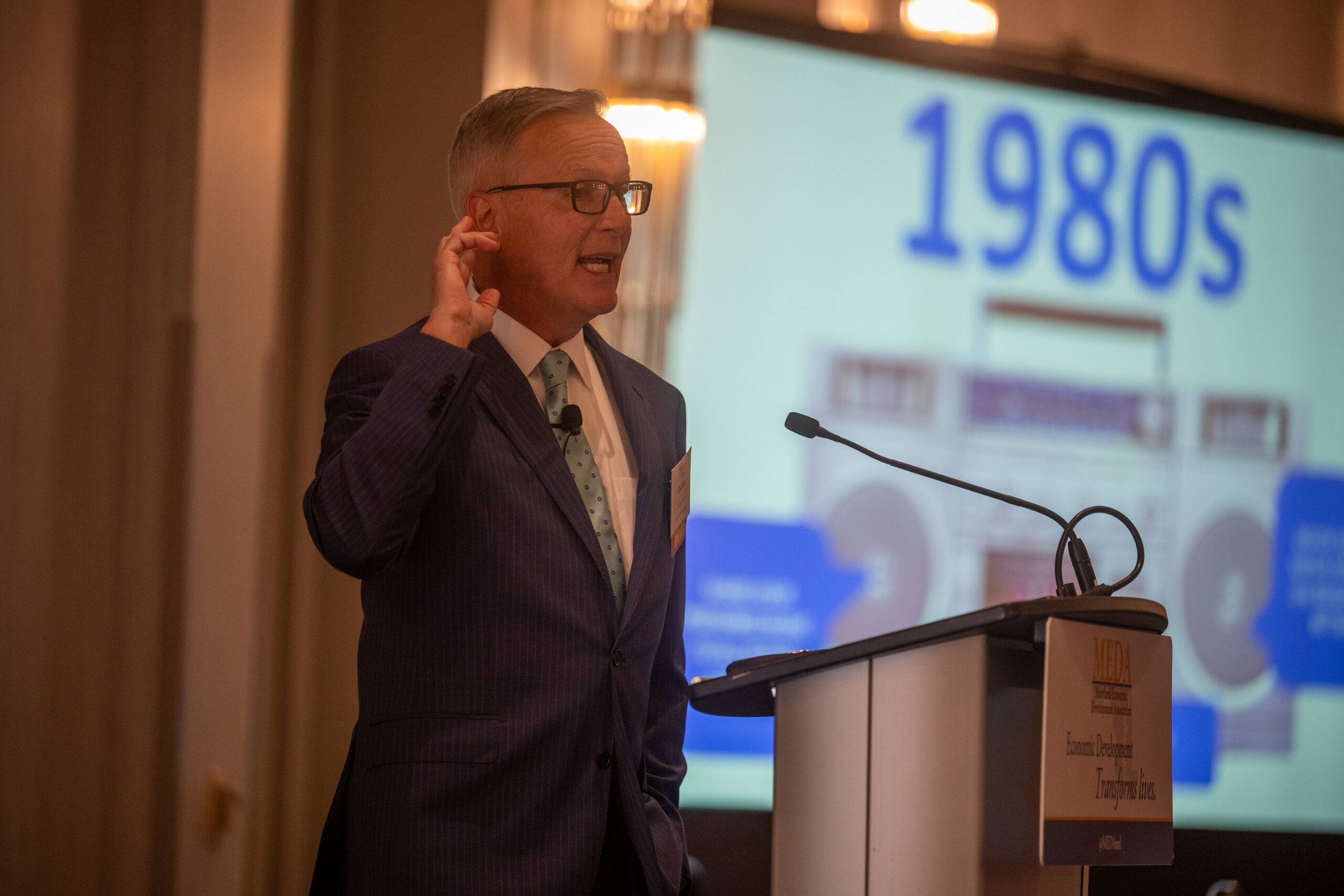
Charles Watts of Clym Environmental introduced a first-of-its-kind project in Frostburg that challenges decades of conventional thinking around medical waste. For over 50 years, regulated medical waste has followed the same path: transport, thermal treatment, and landfill disposal. Watts posed a critical question—what is the true cost of that process?
Traditional methods:
- Require high energy and water usage
- Generate hazardous emissions and greenhouse gases
- Produce waste heat and microplastics
- Still end in landfill disposal
Clym’s approach reimagines the entire system. By using solar energy to generate ozone (a naturally occurring disinfectant), the company can neutralize infectious waste through oxidation without water, emissions, or landfill reliance. The result is a model that is not only environmentally sustainable, but also economically strategic. With millions of tons of medical waste generated annually, this innovation positions Western Maryland at the forefront of a growing global industry. For economic developers, the takeaway is clear: supporting breakthrough technologies in legacy sectors can unlock entirely new regional advantages.
Advancing Small-Scale Manufacturing: Competing Through Innovation
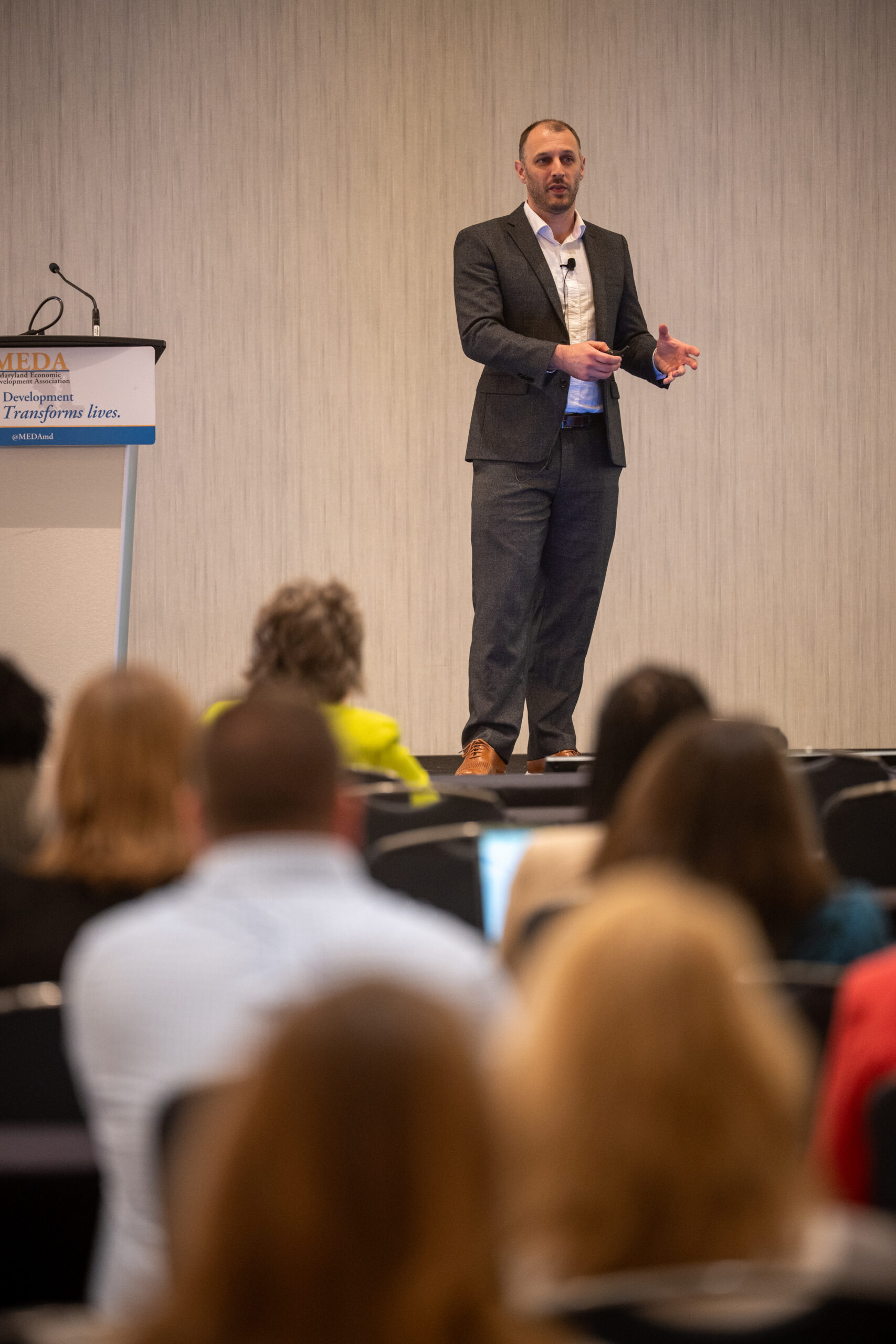
Greg Hitz of ION Storage Systems highlighted how next-generation battery technology is reshaping advanced manufacturing and global competition. Originating from the University of Maryland, ION is focused on solid-state batteries, a technology widely seen as the future of energy storage. The challenge is both technical and geopolitical. As Hitz noted, competing with countries like China, where investment in R&D and manufacturing far outpaces the U.S., requires a different approach.
ION’s strategy:
- Build and scale domestically, starting with a pilot line in Beltsville
- Focus on high-value, high-demand applications, such as data centers
- Innovate faster rather than compete on cost alone
This reflects a broader shift in manufacturing strategy: success is less about scale alone and more about speed, specialization, and technological edge.
For economic developers, this reinforces the importance of supporting innovation ecosystems that connect research institutions, capital, and commercialization pathways.
Aerospace and Defense: Speed, Scale, and Strategic Advantage
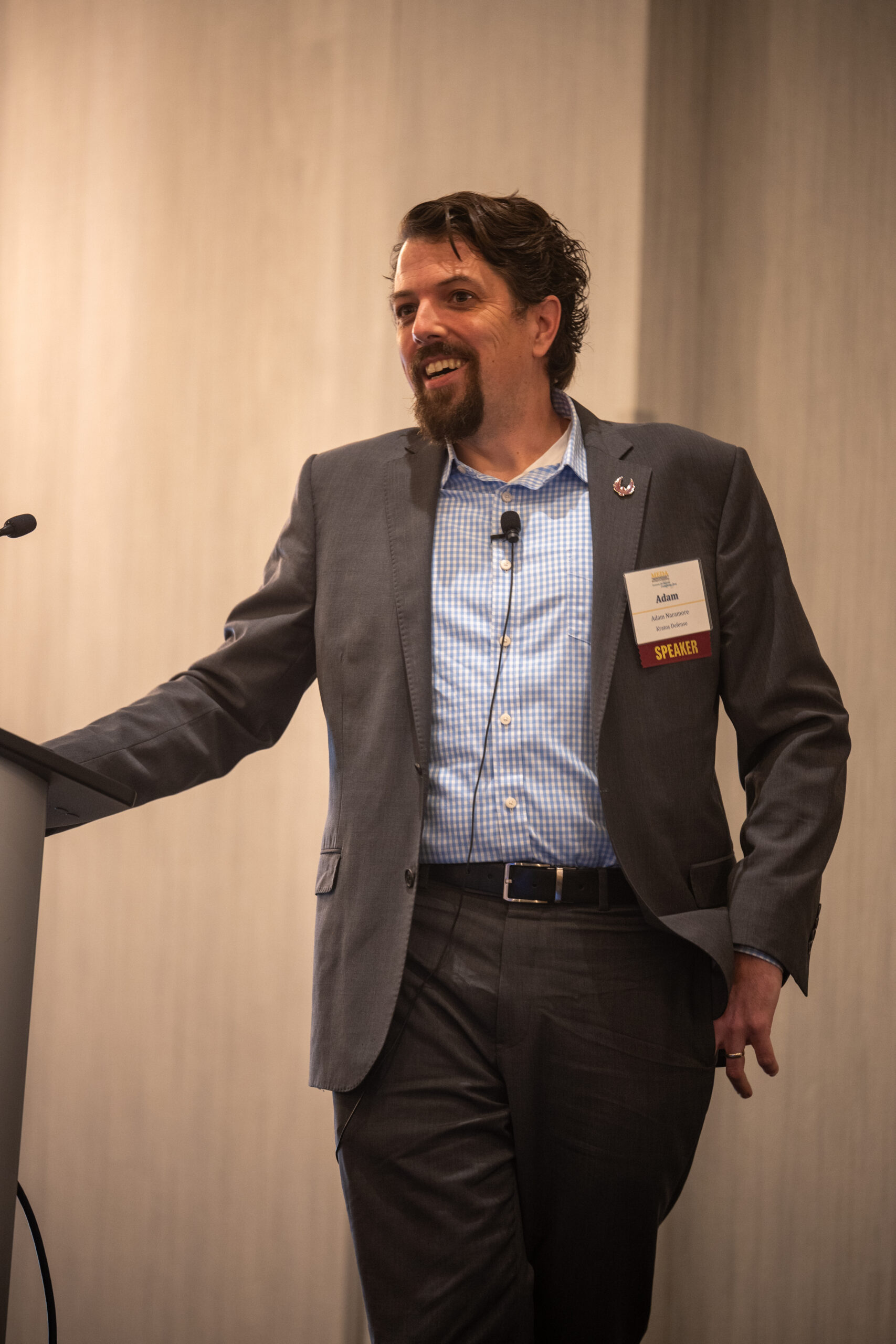
Adam Naramore of Kratos Defense brought a national security and advanced manufacturing lens to the conversation. With operations across Anne Arundel, Prince George’s, and Somerset counties, Kratos is planning to significantly expand its workforce, doubling employment in the coming years. Their work includes developing systems that simulate adversary threats, allowing the U.S. military to better prepare for real-world scenarios. The company’s forward focus is even more telling: hypersonic technology. Hypersonic systems, capable of traveling at five times the speed of sound, represent a critical frontier where the U.S. is working to regain global leadership.
Kratos’ competitive approach is defined by:
- Speed to delivery
- Lower-cost production models
- Nimble, flexible development processes
This signals a broader shift in aerospace and defense: innovation is no longer just about capability. It is about how quickly and efficiently that capability can be delivered.
Across all three presentations, a consistent theme emerged: innovation is being driven by rethinking systems, not just improving products. Environmental tech is redesigning waste management from the ground up. Manufacturing is shifting toward agility and specialization. Aerospace is prioritizing speed and adaptability over scale alone.
For economic developers, this represents a critical shift. Attracting and retaining these industries requires building environments where innovation can thrive.
- Look for Innovation in Traditional Sectors: Breakthroughs are not limited to new industries; legacy sectors often hold the greatest opportunity for transformation.
- Support Commercialization, Not Just Research: Connecting innovation to market is where economic impact happens.
- Prioritize Speed and Flexibility: Companies are competing on how quickly they can adapt and deliver, not just what they produce.
- Align Around Growth Industries: Target sectors where technology, demand, and scalability intersect.
- Think Regionally About Industry Clusters: The success of these companies is tied to broader ecosystems.
This session made one thing clear: innovation is not a buzzword. It is a competitive necessity.
From Frostburg to Beltsville to Maryland’s aerospace corridors, companies are redefining how industries operate, scale, and compete. The role of economic development is to ensure that these innovations don’t happen in isolation, but are supported, amplified, and anchored within our regions. The communities that succeed will be those that recognize innovation not as a single initiative, but as a system that requires collective action to maintain and grow.