Guest Blog: First Brood: An Economic Wake-Up Call for Maryland
This blog was written by Lofton Scholar Recipient, Connor Norman, Business Development Specialist, Garrett County Government
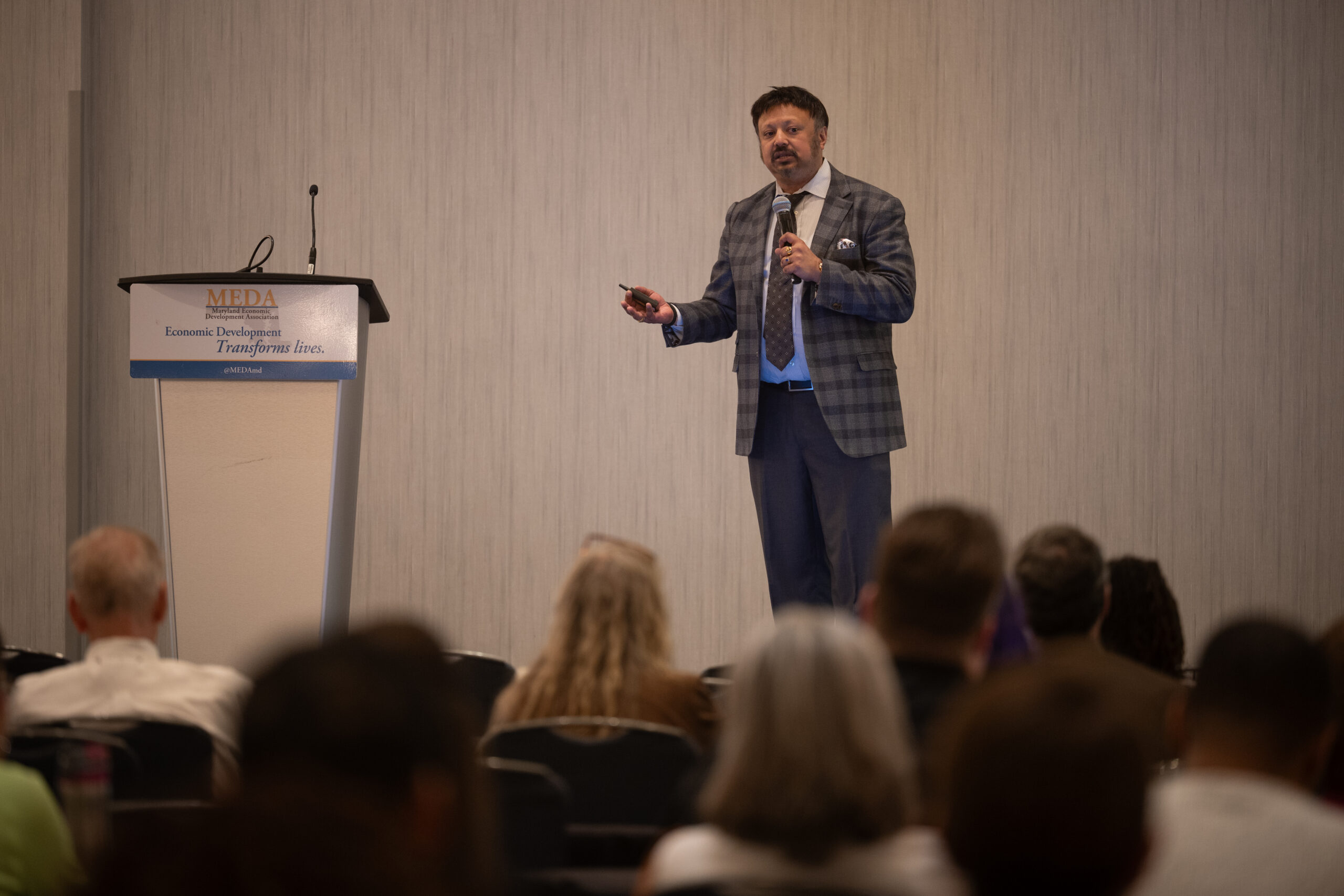
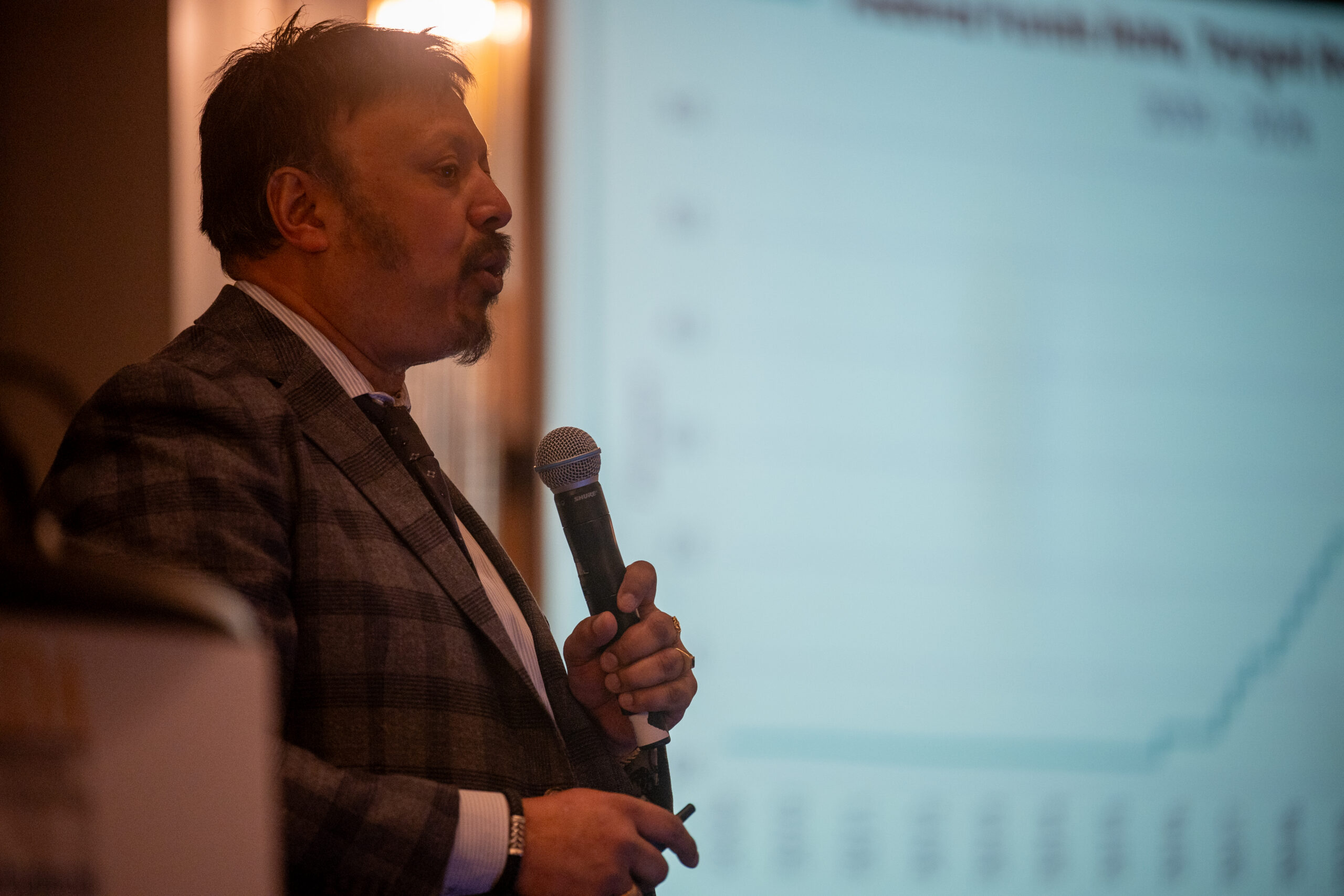
At the recent Maryland Economic Development Association (MEDA) conference, economist Anirban Basu of Sage Economics delivered a memorable and sobering keynote titled “First Brood.” Blending humor with hard truths, Basu framed his economic outlook through the lens of classic Sylvester Stallone films like Rambo, Rocky, Judge Dredd, and others, offering a creative but deeply concerning picture of where Maryland and the broader U.S. economy stand today.
For those who missed the session, the message was clear. While the national economy shows signs of resilience, underlying conditions, particularly in Maryland, suggest growing vulnerability. More importantly, Basu emphasized that economic developers will play a critical role in shaping what happens next.
A Bleak Mood: Consumer Sentiment and Inflation Pressures
Borrowing from Judge Dredd, Basu painted a stark picture of consumer sentiment, which has dropped to 49.8 percent, its lowest level since the 1990s. That number matters. When consumers feel pessimistic, they spend less, and consumer spending drives the majority of economic activity.
At the same time, inflation continues to strain household budgets. While the ideal target is 2 percent, inflation is hovering closer to 3 percent. More strikingly, prices have risen 29 percent since May 2020, far above the 12 percent increase that might have occurred under more stable conditions. Nearly half of Americans, 46 percent, now cite high prices as the primary reason for their financial struggles.
The takeaway is straightforward. Even if top-line economic indicators appear stable, everyday Americans are feeling squeezed, and that sentiment has real consequences for growth.
Over the Top: AI’s Uneven Economic Impact
In a nod to Over the Top, Basu shifted to the rise of artificial intelligence, describing it as an economic arm-wrestling match with uneven outcomes. Since late 2022, AI-related investment has surged, driving record stock market performance and corporate earnings.
However, those gains have been concentrated. A small group of AI-driven tech companies has dramatically outperformed the rest of the market, nearly doubling the performance of the other 443 companies in the S&P. This divergence raises important questions about sustainability and equity in economic growth.
For economic developers, the implication is clear. Attracting and nurturing innovation sectors like AI can yield outsized returns, but regions that fail to participate risk falling further behind.
Maryland’s Challenge: Slipping Competitiveness
Perhaps the most concerning portion of the presentation focused on Maryland itself. The state’s economic momentum appears to be weakening.
Maryland ranked 45th in the 2025 U-Haul Growth Index, a decline from 42nd the previous year, an indicator that fewer people and businesses are choosing to move into the state. Job losses compound the issue. Maryland shed 44,000 jobs between February 2024 and February 2025, followed by an additional 22,000 jobs the next year.
At the same time, the job market has softened nationally, with recent college graduates facing one of the toughest hiring environments in years.
Basu underscored a critical structural challenge. Maryland’s historical reliance on federal jobs and spending is no longer sufficient. As that support becomes less certain, the burden shifts to local leaders.
His call to action resonated across the room:
“We don’t need the Orioles to hit home runs; we need you, our economic developers, to hit home runs to bring private equity back into this state.”
A Little Rocky: Financial Strain on Households
Channeling Rocky, Basu highlighted the growing financial strain on American households. Credit card delinquencies have climbed to 14 percent, and student loan delinquencies are also rising. These figures reflect individuals who are at least 90 days behind on payments, a sign of deeper financial distress.
Homeownership rates have also declined, dropping from 16.8 percent in 2006 to 11.8 percent in 2024, signaling reduced financial stability and upward mobility for many Americans.
For economic developers, these trends underscore the importance of not just job creation, but job quality. Wages, stability, and opportunities for advancement all matter in strengthening local economies.
Cliffhanger: Risks on the Horizon
Looking ahead, Basu warned of a potential cliffhanger moment. Inflation could reaccelerate due to factors such as tariffs, immigration policy shifts, and global conflict. Interest rates are expected to remain higher for longer, increasing borrowing costs for businesses and consumers alike.
Meanwhile, many households are already financially exhausted, leaving little cushion if conditions worsen. Asset prices may also be overextended, raising the risk of market corrections.
Although growth is still forecasted for 2026, risks are elevated. Most major forecasters now place the probability of a recession at around 20 percent, double the typical baseline.
What This Means for Economic Developers
The overarching message of “First Brood” is not one of inevitability, but of urgency.
Economic developers are no longer operating in a stable, predictable environment. Instead, they are on the front lines of navigating uncertainty, tasked with attracting private investment, supporting workforce development, and building resilience in their communities.
Basu’s cinematic framework may have drawn laughs, but the underlying message was serious. Maryland’s economic story is still being written. Whether it becomes a comeback tale worthy of Rocky or something more cautionary will depend, in large part, on the actions taken today.